

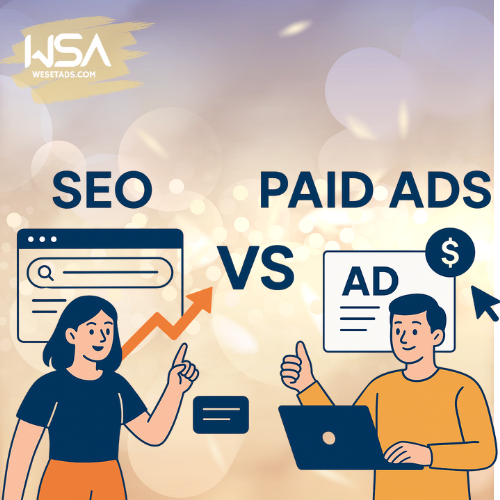
Discover the key differences between SEO vs paid ads for small business growth. Learn which strategy brings faster results, better ROI, and long-term success with our detailed comparison of SEO vs paid ads for small business growth.
Benefits section ( SEO vs Paid ads) for small business:
Benefits of SEO for Small Businesses:
- Long-term, sustainable traffic growth
- Builds credibility and trust among users
- Cost-effective compared to continuous paid campaigns
- Enhances user experience and website optimization
- Supports content marketing and brand authority
Benefits of Paid Ads for Small Businesses:
Immediate visibility and traffic
Highly targeted audience based on location, demographics, and search intent
Flexible budget control and easy performance tracking
Ideal for seasonal campaigns or product launches
Quick insights for marketing strategy optimization
What Is SEO and How Can It Help Small Businesses Grow?
SEO, or search engine optimization, is the process of improving a website’s visibility on search engines like Google to attract organic traffic. For small businesses, effective SEO can be a game-changer because it allows them to compete with larger brands without spending heavily on paid ads.
SEO strategies involve:
- On-page SEO: Optimizing website content, meta titles, descriptions, headings, and images to include relevant keywords.
- Off-page SEO: Building backlinks from trusted websites, local listings, and social media mentions.
- Local SEO: Optimizing Google My Business profiles and local citations so nearby customers can easily find the boutique.
- Content Marketing: Publishing blogs or style guides like “Top Summer Dresses for 2025” to attract visitors and establish authority.
Take, for example, a small boutique clothing store in Mumbai. By implementing a proper keyword strategy such as targeting terms like “affordable boutique dresses in Bangalore” or “trendy boutique outfits near me”. the boutique can appear in search results when potential customers are looking for these products.
With the right SEO approach, the boutique can increase its online visibility, attract more foot traffic to its store, and grow sales organically. Unlike paid ads, the results from SEO compound over time, providing long-term benefits for small business growth.
What Are Paid Ads and How Do They Work for Small Businesses?
Paid ads are also known as pay per click advertising a type of online advertising where businesses pay to display their products or services to a targeted audience. Unlike SEO, which relies on organic traffic, paid ads provide immediate visibility by placing your business in front of users who are actively searching for or interested in your offerings. who are looking for instant results for them paid play a key role.
How Paid Ads Work for Small Businesses:
For a small boutique, paid ads can generate instant traffic and sales. When a user clicks on a Google Search Ad or social media ad, they are directed to the boutique’s website or product page. This targeted approach ensures the business reaches people who are most likely to make a purchase. Paid ads also allow small businesses to control their budget, track ROI, and test marketing strategies quickly, making them ideal for product launches or seasonal promotions.
By combining the right targeting, compelling ad copy, and eye-catching visuals, paid ads can boost visibility and revenue while the business continues to build its organic presence through SEO.
Popular Types of Paid Ads, and see how they helps the small business like Boutique.
1.Search Ads (Google Ads): Appear at the top of search engine results when someone searches for relevant keywords.
Example: A boutique in Banglore can run Google Ads for “trendy boutique dresses Banglore,” appearing instantly when a potential customer searches for it.
2.Social Media Ads: Advertisements on platforms like Facebook, Instagram, and Pinterest to reach users based on demographics, interests, and behavior.
Example: The boutique can target women aged 18–35 in Banglore with Instagram ads showcasing new seasonal collections.
3.Display Ads: Visual banner ads placed on websites, blogs, or apps within Google’s Display Network to increase brand awareness.
Example: The boutique can show colorful banner ads featuring its summer collection on fashion blogs.
4.Sponsored Content / Native Ads: Ads integrated into content or articles, appearing more naturally to the audience.
Example: A blog post about “Top Fashion Trends of 2025” featuring the boutique’s dresses as a recommendation.
SEO vs Paid Ads: Which Is More Cost-Effective for Small Business?
When deciding between SEO vs paid ads for small business growth, the biggest concern is often the marketing budget. Small businesses usually want to know where their money will bring the highest return on investment (ROI) while building a strong digital marketing strategy.
From a long-term vs short-term perspective, both approaches work differently:
SEO (Search Engine Optimization):
SEO requires time and effort upfront—optimizing your website, creating content, and improving rankings. The advertising cost here is lower compared to running continuous paid campaigns. Once your website ranks, the traffic you get is free, which means the ROI improves over time. For small businesses, SEO is a cost-effective solution for sustainable growth and brand authority.
Paid Ads (Google Ads, Social Media Ads):
Paid ads demand a direct financial investment. You pay for every click, and the advertising cost can increase quickly if you’re in a competitive niche. The advantage is instant visibility and measurable ROI, but it only lasts as long as your marketing budget allows. Once the ads stop, so does the traffic. This makes paid ads ideal for short-term promotions, seasonal sales, or new product launches.
Let’s compare both in terms of cost-effectiveness:
Upfront Investment: SEO vs Paid Ads
| Factor | SEO (Search Engine Optimization) | Paid Ads (PPC, Google Ads, Social Media Ads) |
|---|---|---|
| Initial Effort | Requires keyword research, content creation, website optimization, and link building. | Easy to set up campaigns with targeting options. |
| Cost | Lower monetary cost, but high time and effort. | Direct financial investment needed (pay per click). |
| Speed of Results | Slow—takes weeks or months to see ranking improvements. | Instant—traffic starts as soon as ads go live. |
| Sustainability | Long-term benefits once rankings are achieved. | Short-term—results stop when the budget stops. |
Long-Term ROI: SEO vs Paid Ads
| Factor | SEO (Search Engine Optimization) | Paid Ads (PPC, Google Ads, Social Media Ads) |
|---|---|---|
| Return on Investment (ROI) | Improves over time as traffic becomes organic. | ROI depends on continuous ad spend and optimization. |
| Ongoing Cost | Minimal—no cost per click once ranked. | High—pay per click or impression continuously. |
| Value Over Time | Compounds, making it more cost-effective long-term. | Declines quickly once ads are paused. |
| Best For | Sustainable growth and credibility. | Short-term sales and quick conversions. |
Flexibility & Control: SEO vs Paid Ads
| Factor | SEO (Search Engine Optimization) | Paid Ads (PPC, Google Ads, Social Media Ads) |
|---|---|---|
| Audience Targeting | Limited—relies on keyword intent and organic reach. | Highly customizable—location, demographics, interests, timing. |
| Budget Control | Indirect—investment in content/optimization. | Direct—set daily/monthly budgets with full control. |
| Adjustments | Slow—changes take time to reflect in rankings. | Fast—ads can be paused, edited, or scaled instantly. |
| Algorithm Impact | Dependent on Google ranking updates. | Controlled by campaign setup and bidding strategy. |
Long-Term vs Short-Term Benefits: SEO vs Paid Ads
| Factor | SEO (Search Engine Optimization) | Paid Ads (PPC, Google Ads, Social Media Ads) |
|---|---|---|
| Short-Term Impact | Low—takes time to see traffic. | High—instant traffic and visibility. |
| Long-Term Impact | Strong—continues to drive traffic with minimal ongoing costs. | Weak—traffic stops when ads stop running. |
| Sustainability | Builds lasting brand authority. | Works only while budget is active. |
| Best Use Case | Growing online presence steadily. | Seasonal campaigns, product launches, quick wins. |
Can Small Businesses Combine SEO and Paid Ads for Maximum Growth?
Yes — small businesses can absolutely benefit by combining SEO and paid ads as part of an integrated marketing strategy. Instead of choosing one over the other, leveraging both creates a powerful balance of short-term visibility and long-term growth.
- Paid Ads for Instant Results: Google Ads and social media ads help small businesses gain immediate traffic, test new offers, and quickly reach a targeted audience. For example, a boutique can run Facebook and Instagram ads to showcase its festive collection and drive quick purchases.
- SEO for Sustainable Growth: At the same time, search engine optimization builds organic visibility and brand authority. By optimizing for keywords like “affordable boutique dresses in Mumbai”, the boutique can attract steady organic traffic without continuous ad spend.
How They Work Together:
- Boost Conversion Rate: Paid ads can send immediate traffic to landing pages, while SEO ensures those pages stay visible in search results long-term.
- Test & Refine Strategy: Paid ads provide quick data on which keywords and products perform best. This insight can guide the boutique’s SEO content strategy.
- Maximize Brand Visibility: When both ads and organic listings appear on the same search results page, the brand dominates visibility, increasing trust and clicks.
The most effective digital marketing strategy for small businesses is to combine both—use paid ads to drive instant results while steadily building SEO for future growth. This balance ensures your business attracts customers today while laying the foundation for tomorrow’s success.

