

Introduction
Discover how to display our content in geo by creating engaging, location-specific experiences that connect audiences with local relevance, precise targeting, and interactive features.
Explore innovative ways to make your site visible across regions while boosting engagement and visibility for every market.
What is GEO
GEO means Generative Engine Optimization. GEO is an emerging strategy focused on optimizing content for new, AI-driven search engines and generative platforms such as ChatGPT, Gemini, and Google’s AI Overviews.
This ensures that your content is accurately understood, cited, and referenced within the responses generated by AI models at an ever-increasing rate, as user search behavior shifts toward AI engagement. While traditional SEO focuses on keywords and backlinks to rank in search results, GEO ensures content is semantically rich, factual, and well-structured for use in conversational or direct answers from AI.
Geolocation Marketing (GEO)
GEO also very often refers to geolocation or location-based marketing strategy that leverages real-world location data, such as GPS, city, or region, to serve personalized ads and digital experiences.
Examples include targeting audiences with region-specific ads, customizing website content by location, and sending push notifications based on a user’s proximity to a store. This helps brands increase local relevance, engagement, conversions, and foot traffic in stores by directly tying a digital strategy to the geographic position of a user.
How to Display Our Content in Geo
Use geo-targeted keywords such as “digital marketing services in Hyderabad,” “local SEO solutions for Bangalore,” or “best wellness studio in Delhi” within your headings and body content to attract users searching for local results.
Implement plugins or adopt other dynamic website approaches, such as (If-So for WordPress or Shopify’s native Location Rules, which allow showing different sections to users from different locations, so that every visitor will see content relevant to their city or region.
Customize meta titles, descriptions, and image alt text to include location and related keywords, which increases visibility on local search queries.
Simple Ways to Display Your Content in Any Region
To display your content effectively in any region, here are some simple yet powerful strategies you can use:
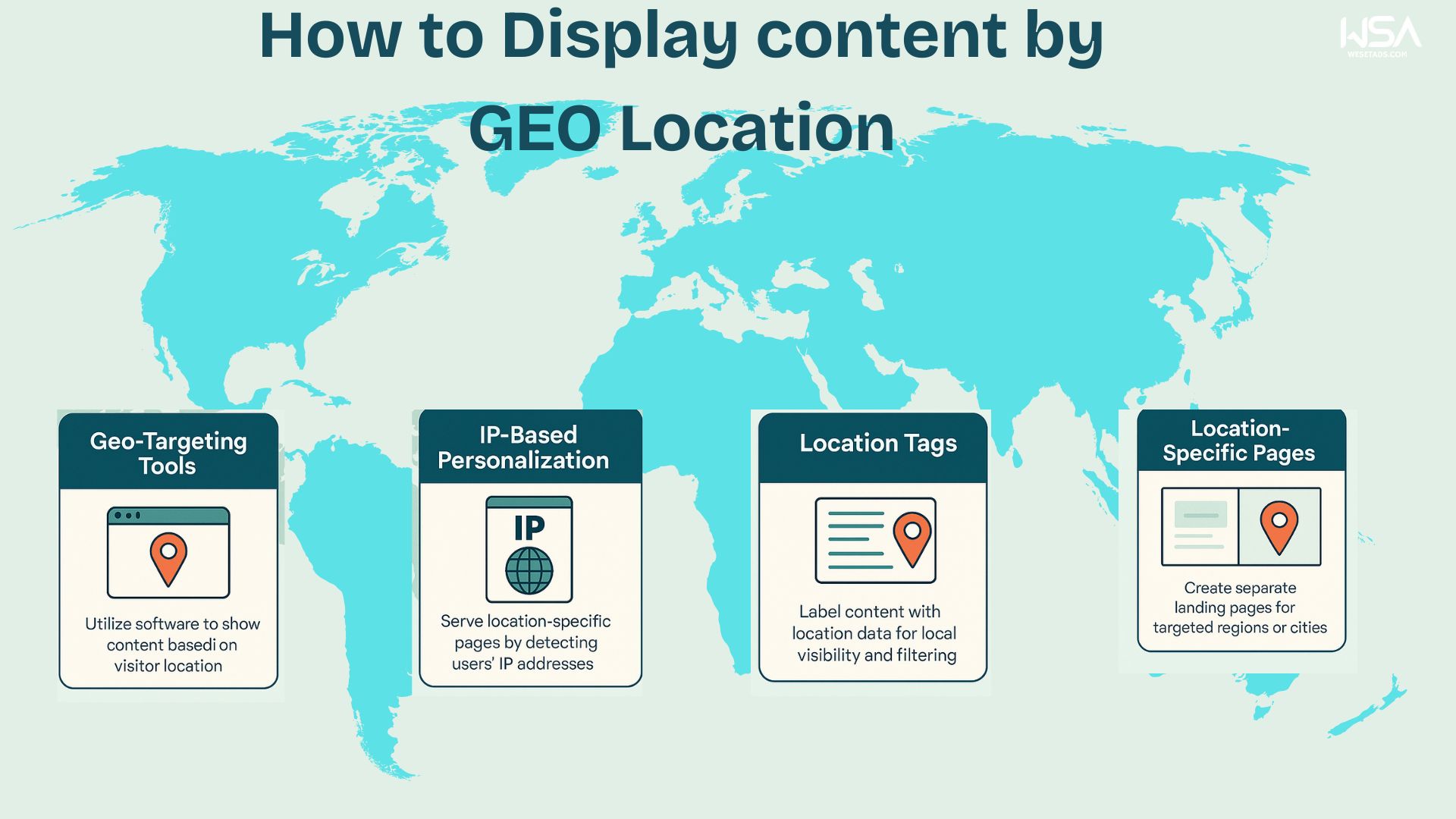
1. Use Geo-location Detection
Geolocation tools or plugins that can detect a visitor’s location based on their IP address or device GPS enable you to show content automatically, targeted by city, state, or country, without requiring manual input.
2. Create Region-Specific Pages or Sections
Create different pages or sections of content for major regions you serve. For instance, you can build localized pages such as yoursite.com/nyc/ or yoursite.com/london/ displaying local offers, testimonials, and contact information.
3. Customize Content Dynamically
Use the dynamic content features of your CMS or page builder and automatically swap out headlines, images, offers, currency, or even language according to visitor location.
4. Use URL Parameters or Cookies
You can display customized content based on location information passed as URL parameters or through cookies storing such preferences, helping users remain on localized content upon revisiting.
5. Leverage Local SEO Keywords
Use geo-targeted keywords in meta titles, descriptions, headings, and content to make sure that search engines deliver your localized content to the right audience.
6. Allow Manual Location Selection
Add a location selector (dropdown or popup) so users can choose their preferred region, ensuring they get content most relevant to them.
The Role of Geo-Targeting in Content Marketing
Geo-targeting is strong in modern content marketing, enabling a brand to deliver various messages to their audience based on their location. In return, location data can be analyzed to enable marketers to run region-specific campaigns that align with local preferences, languages, and cultural nuances.
This approach will ensure that your content marketing strategy reaches the right audience at the right time, boosting engagement rates, click-throughs, and conversion potential. Using geo-targeting means businesses can tailor landing pages, social media ads, and email campaigns to align with local trends, events, and buyer intent.
Additionally, incorporating geo-targeted content strengthens local SEO performance, ensuring brands rank higher in “near me” searches, Google Maps results, and regional SERPs. In other words, geo-targeting enables brands to shift from generic messaging to hyper-localized story telling-driving better customer relationships and tangible marketing success.
Localized SEO: Ranking Higher in Regional Searches
Local SEO forms the backbone of a successful geo-based digital marketing strategy; it’s all about optimizing your online visibility to rank higher in regional search queries and thereby attracting more possible customers within certain local markets. Location-specific keywords, optimization of Google Business Profiles, and NAP consistency across listings can help a brand try to gain more visibility for “near me” searches and queries of local intent.
Running local SEO winner strategies-local landing page creation, local link building, and publishing content relevant for a specific region—all help the search engines understand the authority of your brand in a certain area. You also integrate structured data (schema markup) that will help you get featured on Google’s local pack and map results.
For modern brands, mastering localized SEO means connecting with audiences where they live and search. It’s about taking that online visibility to foot traffic, local leads, and lasting brand loyalty.
FAQ’s
Conclusion: Building Global Impact Through Local Connection
In today’s world, building a global brand presence starts with an understanding of the power of local connections. Through better engagement with localized content and geo-targeted marketing strategies, brands can forge authentic relationships with audiences across diverse regions. When your message reflects the language, culture, and needs of local consumers, it resonates more profoundly, turning engagement into trust and trust into growth.
Not only do modern businesses focusing on regional personalization and localized SEO attract local customers, but they also expand globally with enhanced brand credibility. Every local story told, every region-specific campaign rolled out, will build your global presence.
Essentially, success in content marketing is not about reaching everyone; it’s about reaching the right

